A gas cylinder production line is a specialized industrial system designed to manufacture high-pressure gas cylinders efficiently, safely, and consistently. It typically combines automated equipment, precision processing, and strict quality control to ensure that each cylinder meets international safety and performance standards. Such production lines are widely used in the manufacture of cylinders for industrial gases, medical gases, welding gases, liquefied petroleum gas, and other compressed gas applications.
The production process usually begins with raw material preparation. High-quality steel sheets or seamless steel tubes are selected according to the required cylinder type and specification. The material must have excellent strength, toughness, and weldability to withstand high internal pressure. After inspection, the material is cut and formed into the necessary shape. In some production lines, cylinder bodies are made from hot-rolled steel plates that are deep-drawn and spun into shape, while in others seamless steel tubes are used as the starting point.
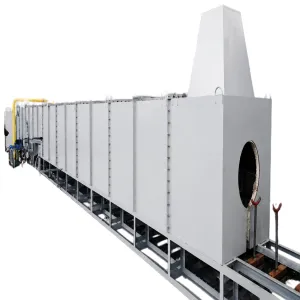
Next comes the forming and welding stage. For welded cylinders, the steel body is shaped using pressing or spinning equipment, and the shell is welded with advanced automatic welding machines. The welding seams are carefully controlled to ensure uniform penetration and strong joint quality. After welding, the cylinder undergoes heat treatment to relieve internal stress and improve mechanical properties. This process is critical for enhancing durability and safety.
Following heat treatment, the cylinder body is trimmed, necked, and threaded. The valve opening is machined precisely to match the required valve specifications. Surface cleaning is also an important step. The cylinder is usually shot blasted, polished, or chemically treated to remove rust, scale, and impurities. This prepares the surface for later coating and helps improve corrosion resistance.
Testing and inspection are among the most important parts of the production line. Each cylinder must pass a series of strict examinations, such as dimensional inspection, pressure testing, leak testing, and non-destructive testing. Hydrostatic testing is commonly used to verify that the cylinder can safely withstand pressures beyond normal working conditions. Ultrasonic or magnetic particle testing may also be applied to detect hidden defects. Only cylinders that pass all tests are approved for further processing.
After inspection, the cylinder is coated and finished. A protective primer and topcoat are applied by spraying or powder coating to improve appearance and resistance to corrosion. Marking and labeling are then completed, including cylinder specifications, pressure ratings, manufacturing codes, and safety information. Finally, valves, caps, and other accessories are installed before the finished products are packaged and stored.
Modern gas cylinder production lines emphasize automation, efficiency, and safety. Robots, conveyor systems, and computer-controlled machines help reduce labor intensity, increase productivity, and improve consistency. At the same time, advanced monitoring systems and quality management procedures ensure that every cylinder meets the required standards. Because gas cylinders are used to store dangerous compressed gases, reliable production is essential. A well-designed production line not only improves manufacturing efficiency but also helps protect users and maintain long-term product safety.







 English
 Pусский
 Français
 العربية



 Teléfono